

THE Guide to Argentina’s Midterm Elections 🇦🇷
OIJ (#38) Can Milei Still Win This Sunday October 26th?

Welcome back dear fellow 🧙♂️ Hermits 👋
🧙♂️ First time here? → This 3-Minute Crash Course Will Save You Hours
🇦🇷 Argentina Is On Fire → Here’s The Hidden Spark Behind It
💡 Our Lastest Pick → +59% Rev. CAGR, 3× FCF, 48% ROIC & 50% Net Cash

So… Argentina’s midterm elections are coming up on October 26, 2025, and everyone and their mom seems to have an opinion.
Polymarket definitely has one.
In case you don’t know what Polymarket is, it’s a betting site based on Polygon (Ethereum tier 2) and Solana blockchains that enables betting on anything.

It’s also a neat proxy for public sentiment… and you know what they say about the wisdom of crowds. In Argentina’s case, Polymarket is flashing two data points that could spell a V/L for Milei.
On one hand, he’s expected to scoop up a batch of congressional seats…
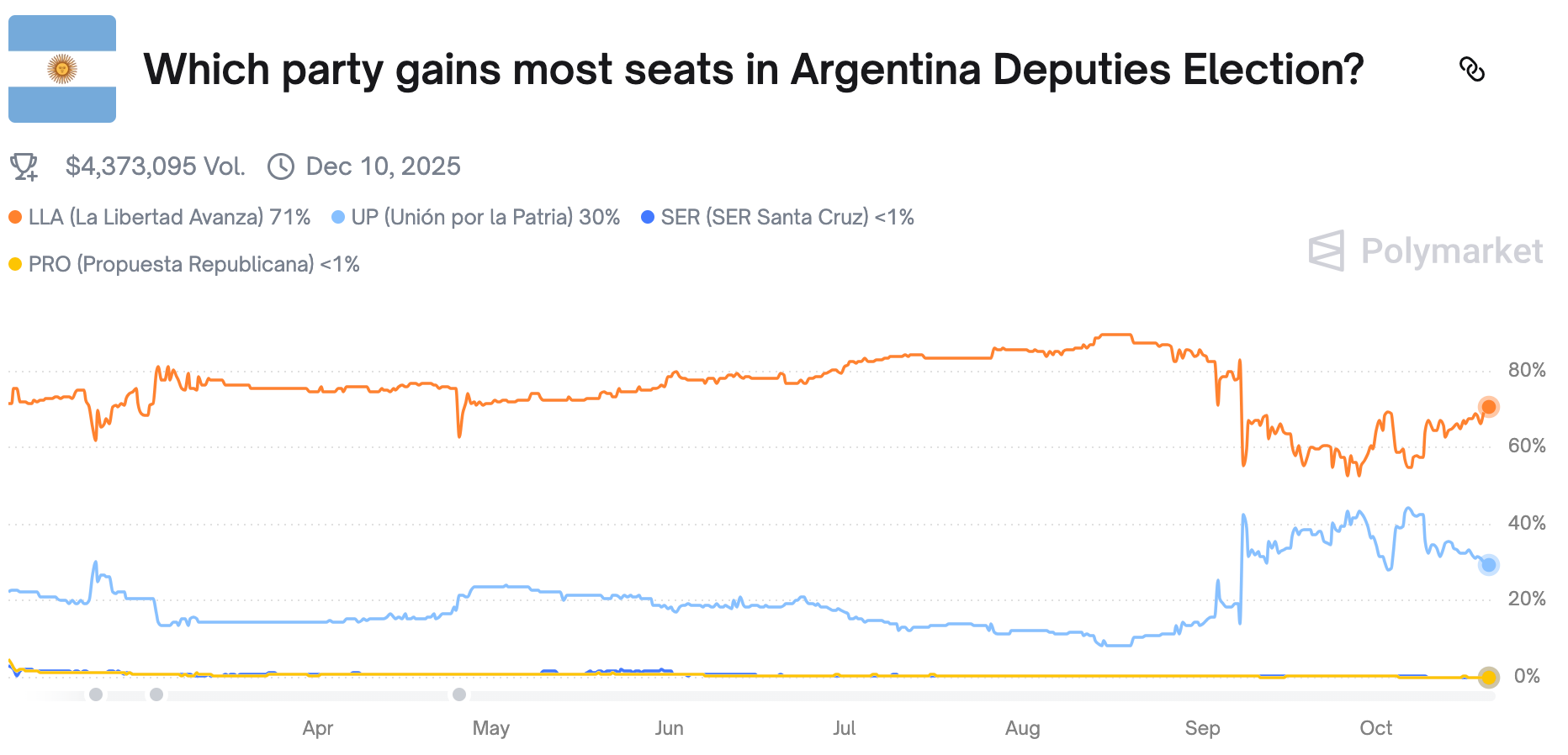
… but he’s also expected to lose.
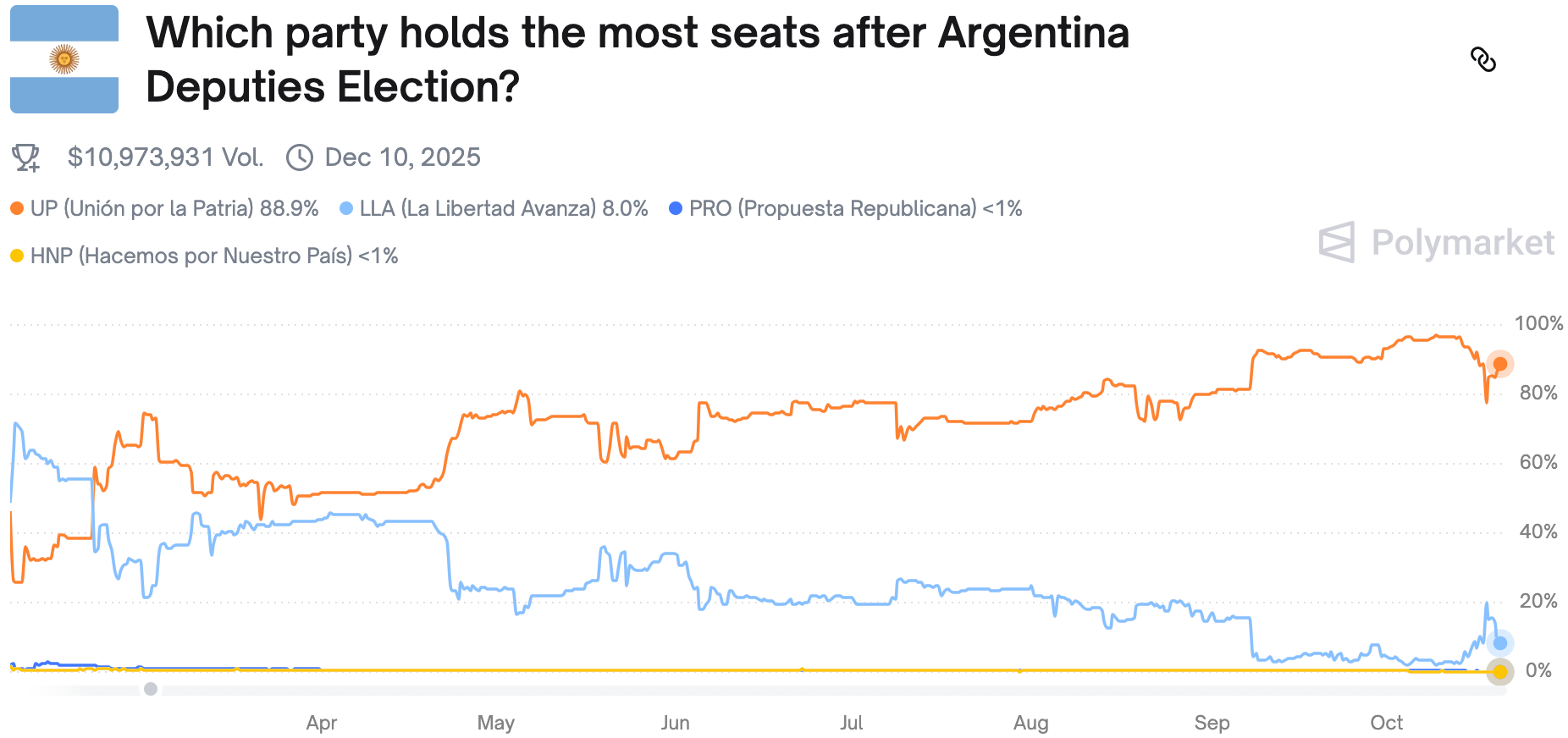
So what the hell’s actually going on… and, more importantly, who’s really winning?

Some Context (to make sense of the madness)
The Chambers
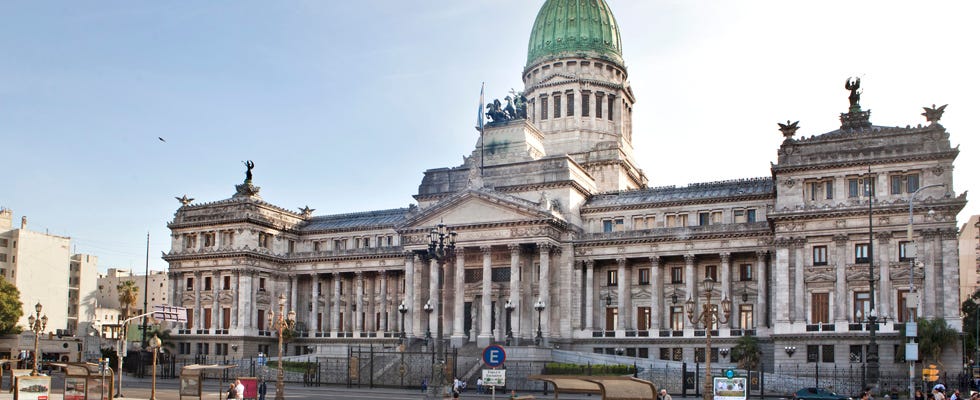
On the one hand, the Chamber of Deputies (Congress) is where Argentina’s politicians decide their new taxes, budgets, and spending plans.
The Deputies are supposed to act as accountants, checking how every peso gets used in that yearly Cuenta de Inversión report everyone pretends to read.
They also hold the impeachment trigger, launching cases when presidents go off-script, and can dig into shady government moves through commissions.
And they get to ratify presidential decrees and treaties, though the Senate has final approval.
On the other hand, the Senate is the chamber of revision.
It’s where new laws get polished or rejected. When impeachment season hits, Senators play jury, deciding the fate of presidents.
They also have to sign off on the country’s top jobs like Supreme Court judges 👩⚖️, ambassadors 🌍, generals 🪖, and the Attorney General.
They’re the ones who can approve stuff like the state of siege/emergency (seen during COVID) or key treaties.
Argentina is divided into 24 electoral districts (23 provinces + Buenos Aires City), which together elect 257 deputies to the Chamber of Deputies and 72 senators to the Senate.
The Chamber of Deputies runs on four-year terms, but only half the seats renew every two years.
The Senate runs on six-year terms, with a third renewed each (2 years) cycle.
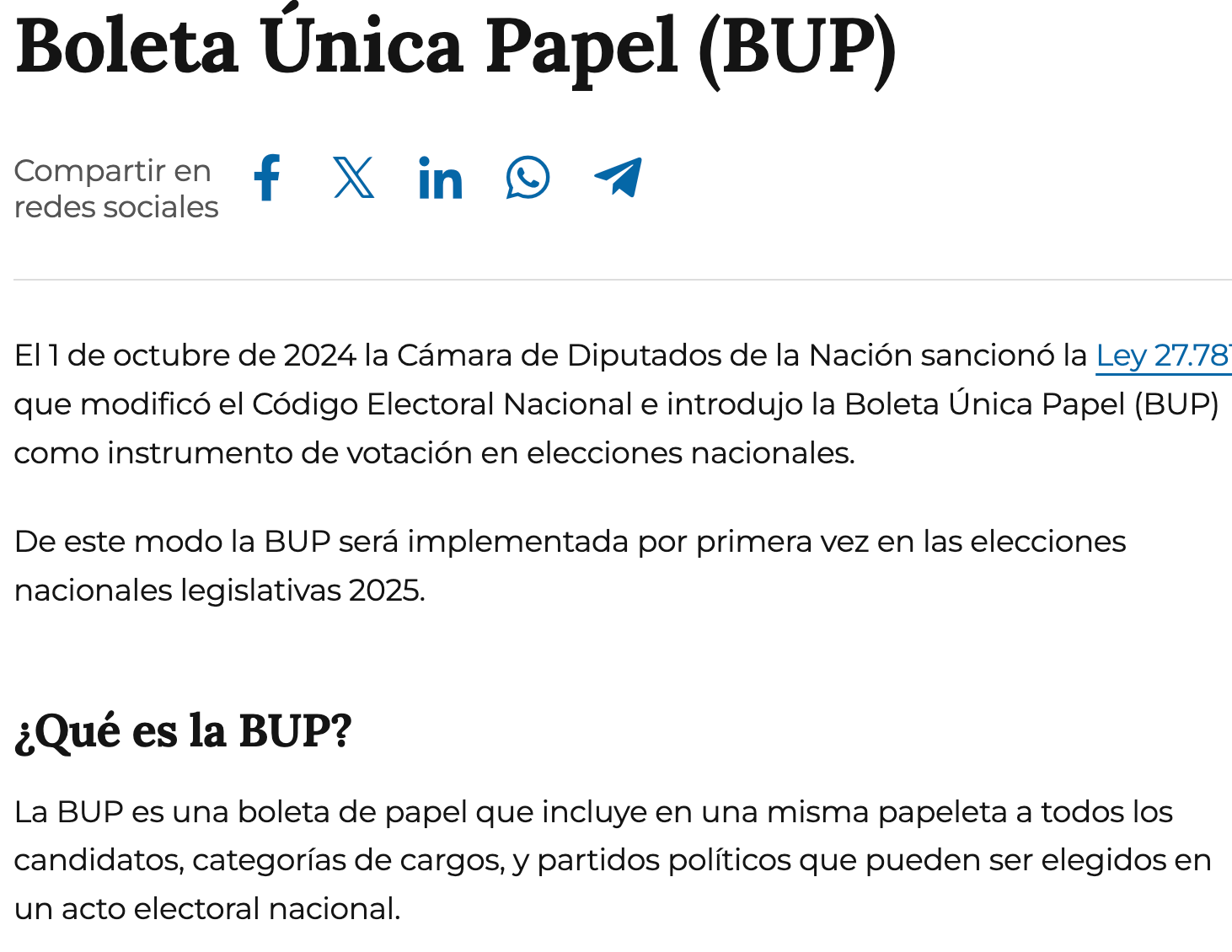
This year, the vote will be conducted under the brand-new boleta única, a single paper ballot meant to clean up the mess of old-school ballot lists.
Election Mechanics
Normally, parties fight it out in open primaries before the big day. Primaries in Argentina allow for the most-voted candidate of a party to then represent the party as a whole.
Quick note: You also have the (presidential) PASO primaries, where voting is mandatory.
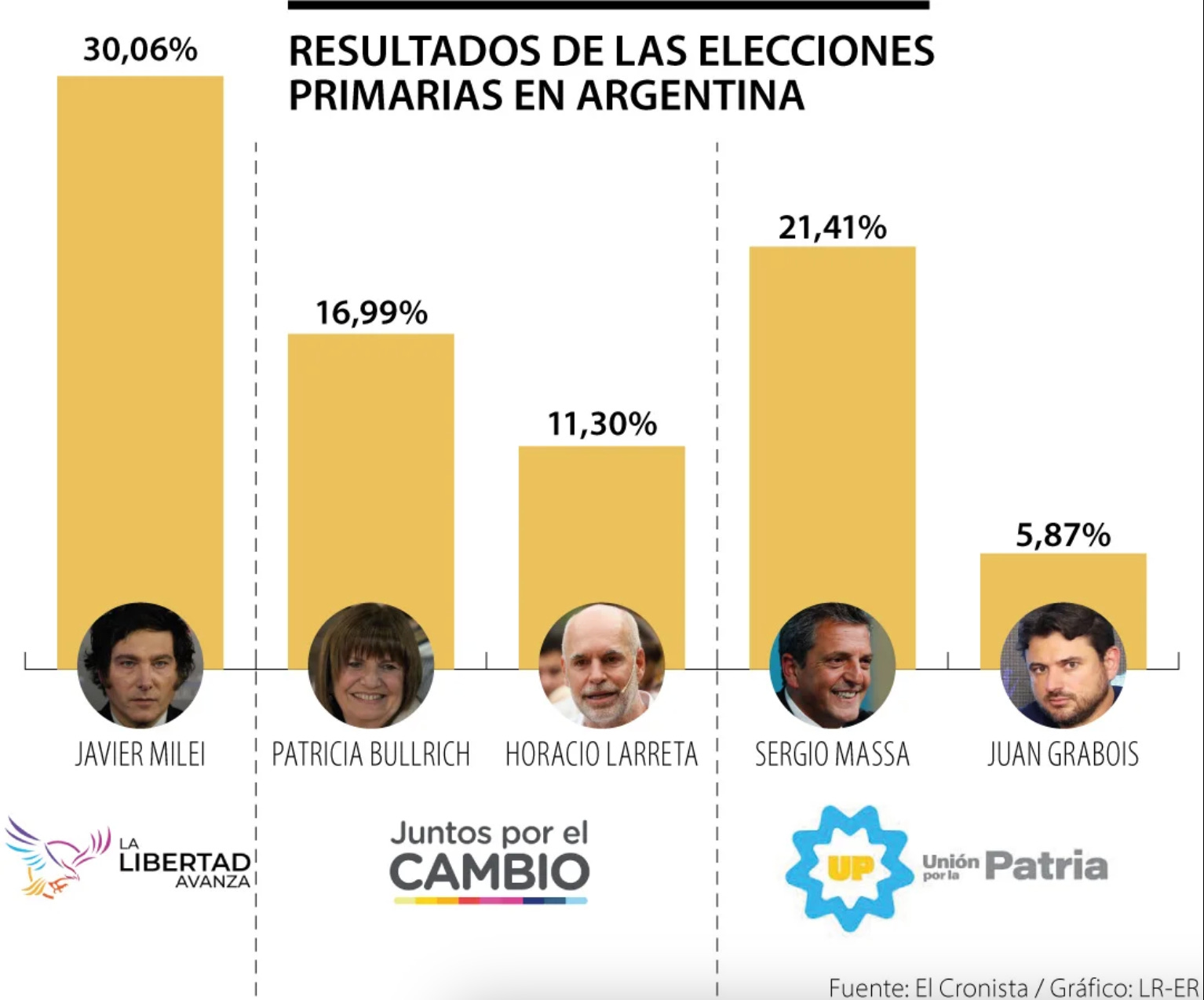
In the midterms, you go directly for the final vote. Both chambers are elected with closed lists, meaning candidates are already preselected.
You essentially vote for a party.
Congress seats are distributed with the D’Hondt method, which slightly favors larger parties and coalitions, and it discards parties that get <3% of the votes.
For context: The D’Hondt method is a proportional representation system that divides each party’s total votes by a series of divisors (1, 2, 3, 4…) to allocate seats based on the highest resulting averages.
The senate has some special math (of course it does) with two seats for the winner, one for the runner-up in each province.
The provinces voting for senators this round include: Buenos Aires City, Chaco, Neuquén, Salta, Río Negro, Santiago del Estero, Tierra del Fuego, and Entre Ríos.
🧙♂️ So, fellow Hermits, what should we keep an eye on?
First and foremost, voter turnout. The recent stumble in Buenos Aires Province can be explained amost entirely with the # of missing voters.
Only 62% of people showed up, compared to 74% nationwide during the 2023 presidential race. In other words, the real opponent of Milei is not “Peronismo” but rather apathy.
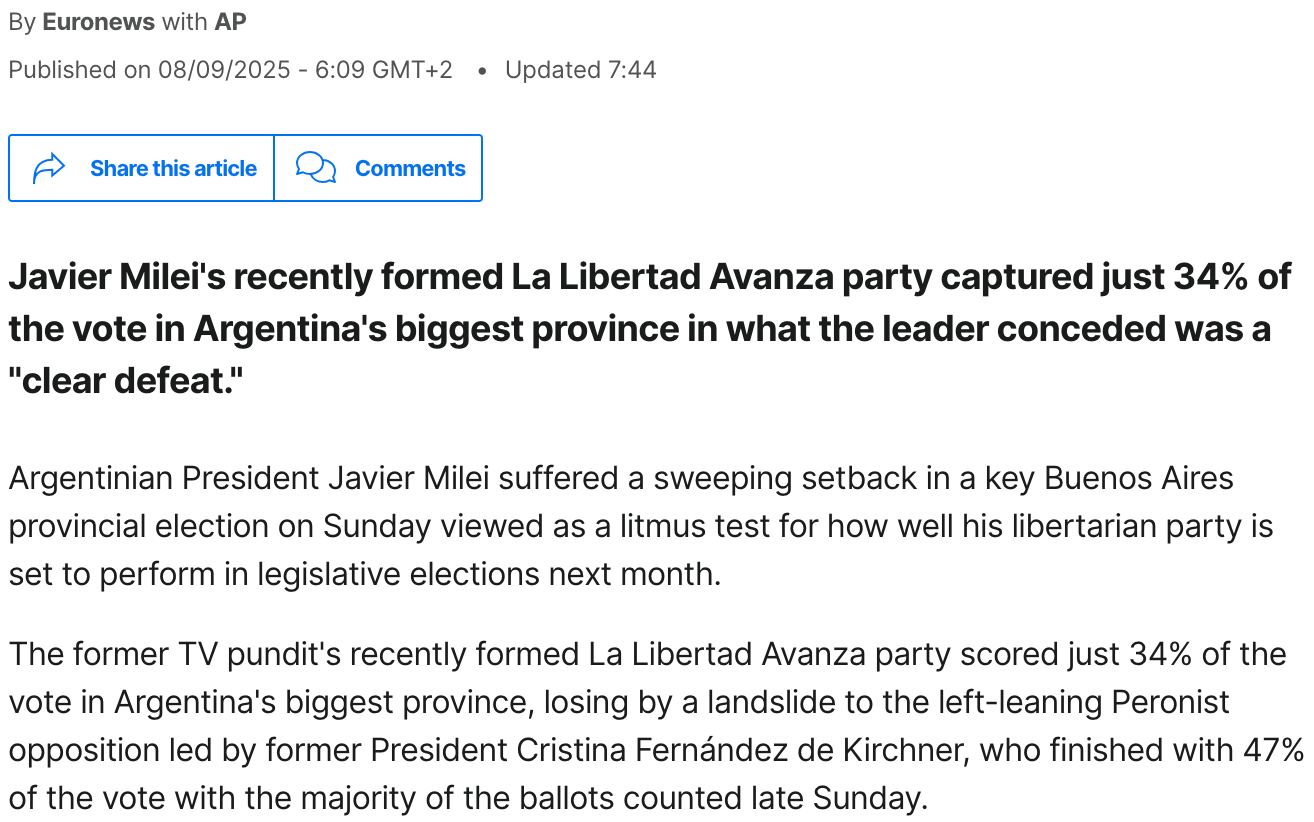
The Buenos Aires provincial vote in August, often labeled a “setback,” was more of a mixed picture. Milei’s share rose from low single digits to the mid-30s, while Kirchnerism slipped from the 60s to the 40s. Not a landslide, but hardly a collapse either.
The second item is defining the threshold. Milei doesn’t need to win this election to push his vision forward; he just needs a blocking minority, roughly 25–30% in each chamber.
In Argentina’s Congress, a blocking minority means holding enough seats to prevent the other side from reaching the required majority needed to pass or overturn certain key decisions… this is especially true when it comes to veto overrides, constitutional reforms, and emergency decree rejections (DNUs).
So if Milei gets to 65-75 seats in Congress and 18-22 senators, he’d still be able act more freely as the commander in chief. In a perfect scenario, Milei would get 86 seats (33%) and this would de facto blocks any bill.
As a quick reminder, Milei holds 37 seats in Congress and 6 seats in the Senate. That means that he needs to grab 28-38 out of the 127 (22-30%) available seats for Congress , and 12-16 of the 24 (50-67%) available Senate seats.
Editing Milei (and his agenda)

Historically, Argentine midterms haven’t been kind to sitting presidents.
This is the halfway exam for Javier Milei’s government. He’s been swinging a chainsaw through the bureaucracy (and budgets), and now the voters get to grade his homework.
For Milei, this election is a referendum on everything:
his reforms
his peso
his ideology/ideas
his volatility
his memes
even his dog Conan (RIP)

Again, we’d estimate that reaching 25–30% of seats would give him a blocking minority. Achieving these marks would be enough to prevent Congress from overturning his decretos de necesidad y urgencia (emergency decrees).
With that threshold, he could govern without striking costly deals with Peronists or traditional conservatives.
That means that he could pass the necessary reforms.
FYI, here’s a list of DNUs that were blocked or subjected to major changes due to Congress/Senate:
🧾 DNU 70/2023: “The Mega-Decree”
In December 2023, Milei kicked off with this 366-article monster meant to “rebuild Argentina’s economy.”
It tried to deregulate everything from rent laws to labor rules to price controls in one swing.
The courts, unsurprisingly, suspended major sections for overreach, especially the parts rewriting labor law. Congress didn’t kill the whole decree, but most of it turned into a useless combo of Coke Light-type regulations.
⚖️ The Labor Reform from DNU 70/2023
Within the mega DNU, the most controversial section was Milei’s Labor reform. His push to extend probation periods, slash severance pay, and punish strikers lasted about as long as an Argentine wage before inflation.
The National Labor Appeals Chamber blocked the whole thing in early 2024, ruling that labor codes aren’t something you rewrite by presidential fiat.
🕵️♂️ The Intelligence Agency
One mid-2024 DNU quietly funneled more money to the SIDE, Argentina’s intelligence agency.
Congress spotted it, growled, and promptly annulled it in September.
🏛️ The Budget Battles w/ Universities & Healthcare
When Milei’s austerity drive started choking universities and pediatric hospitals, public outrage forced Congress to step in and reverse the cuts.
📜 Scoreboard
By mid-2025, Milei’s government had already amended nearly 100 laws by decree, making the DNU Congress’s favorite punching bag. Some reforms still stand, others are frozen or struck down.
🙏 Feel free to ❤️ and comment so that more people can discover and enjoy this Substack 😇
https://open.substack.com/pub/thiagodearagao/p/five-things-the-us-wants-from-argentina?r=2di31u&utm_medium=ios